 EcoDesign
I design with nature — gardens, parks, farms, villages, communities. It is not work you do from one discipline. A single project pulls in soil regeneration, water harvesting, planting, pest and disease management, amendments and technology selection, and usually several experts who each see one part of it.
Two phases, and a lot of connections
The work splits into two phases. First comes Research: collect as much as possible about the site, then read it for potential and for risk — which plants and cash crops actually suit this place, what the opportunities are, what threatens it, forest fire included. Everything gathered here exists to make the next phase defensible.
Then comes Design, where the decisions get made:
- selecting animals, plants, soil amendments, structures, technologies, farming practices
- soil regeneration and management plans
- water harvesting and storage strategies
- site design: parceling and zoning the landscape, defining what each zone holds and what happens there, and sector analysis to understand threats and opportunities
- planting and garden plans
Quite complex projects, indeed.
Belentepe
I did not arrive at this from theory.
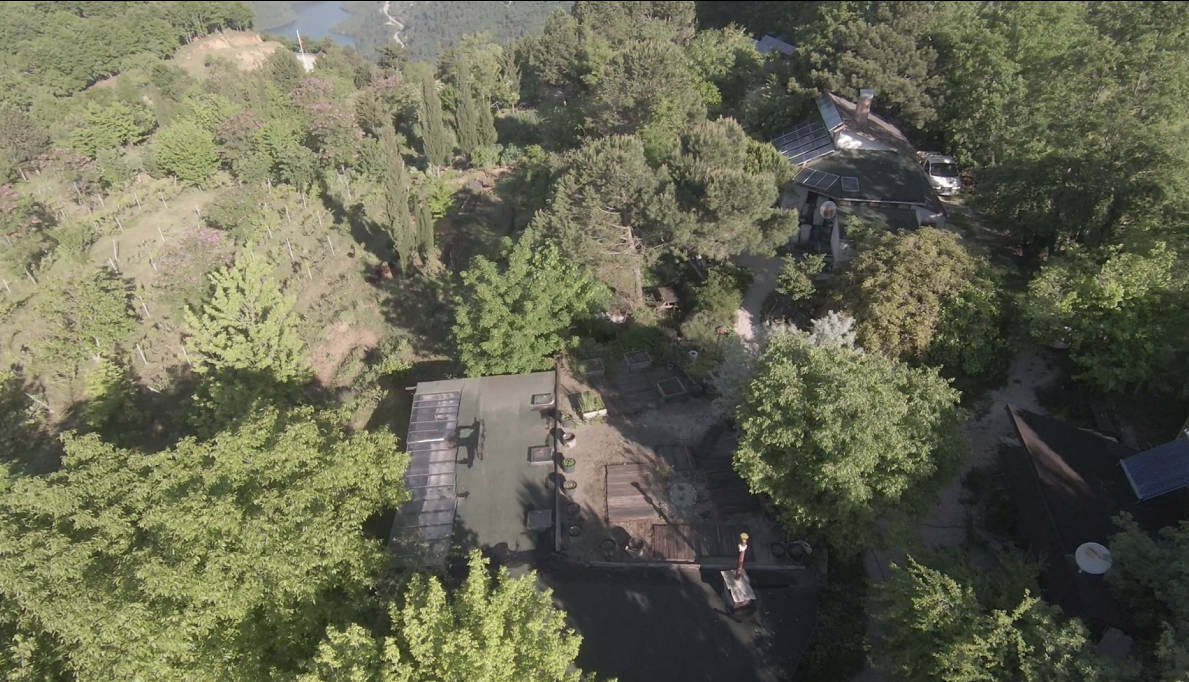
That is Belentepe Farm, which I own. It began as a deserted, degenerated grain field — thin soil, no structure, nothing holding water — and it is now a thriving food forest. You can read both states in the one frame: the young staked terraces on the left slope, the closed mature canopy through the middle and right, the beds and the greenhouse and the solar between them.
Belentepe is also where the frustration came from. The research that made those decisions defensible took weeks, it lived in scattered documents, and every new project started the gathering over from nothing.
What changed, from 2022 onward
When ChatGPT arrived at the end of 2022, I was eager to see whether it could help with any of this. Back then it gave fast answers across many areas and shortened our research time. Image generation improved until any idea or concept could be rendered in seconds. Then custom AI agents appeared — give them a knowledge base of your own documents, and they answer from it.
Now we are at the system level, where many agents work together and handle different processes of one system. That is the door that opened, and it is the one EcoDesign walked through.
Why it had to be built as a system
Working with nature means working with a complex system, where members form beneficial connections — one's output is another's input, or the relationship is outright synergistic. More diversity and more connections make the whole more resilient: more capacity to absorb a shock, internal or external, and carry on. I wrote about why that principle shapes the entire platform in Designing for Resilience.
I had complex adaptive systems in mind the whole time I was building EcoDesign, trying to see a project or a community whole, as a system rather than a pile of documents. I was fortunate to have some coding experience, and as AI coding improved I rode that wave and kept extending what the app could do.
The hardest part was not the AI. It was the database. Data has to be stored so that models can fetch it, understand it and use it — get that structure right and every output downstream improves, and get it wrong and no amount of clever prompting rescues you. As that structure improved, so did the insights, the reports, everything the app produces.
The newest piece
We have just introduced the Project Dashboard: every step of your project — research, design, build, farm — as one living map, so you always see where you are and what comes next. It shows the recommended step and the reason it was chosen, and you can ask the project guide questions about your own project. It made the whole app markedly easier to navigate. Here is how it works.
I would like to hear from you
If you try it and something breaks, confuses you or is missing, write to me at support@earthunited.eco — which module, what you expected, what actually happened. I read all of it, and it is what decides what gets built next.
You can start a project for free.
— Taner Aksel, Designer & Creator, EcoDesign